Guide · Legal ChatGPT
Legal ChatGPT vs a firm legal workspace in the GCC
ChatGPT is a capable general assistant. Client matters raise different questions: who can see the file, which law an answer rests on, where the data is hosted, and whether the Arabic holds up. Here is where each one fits.

The short answer
The right tool depends on the work
Many lawyers already use ChatGPT, and for some tasks it does the job well. The line is usually confidentiality and accountability: once the work touches a client file, or needs a source a partner will sign off on, it belongs in a workspace.
When ChatGPT is enough
- Brainstorming the structure or arguments of a draft that contains nothing confidential
- Rewording public-facing text, such as an article or a page on the firm's website
- Explaining a general concept or summarizing publicly available material
- Personal productivity: emails, outlines, and first drafts with no client data
When a firm needs a workspace
- The prompt or attachment includes client names, contracts, or matter facts
- The answer has to cite the specific law, regulation, or document it relies on
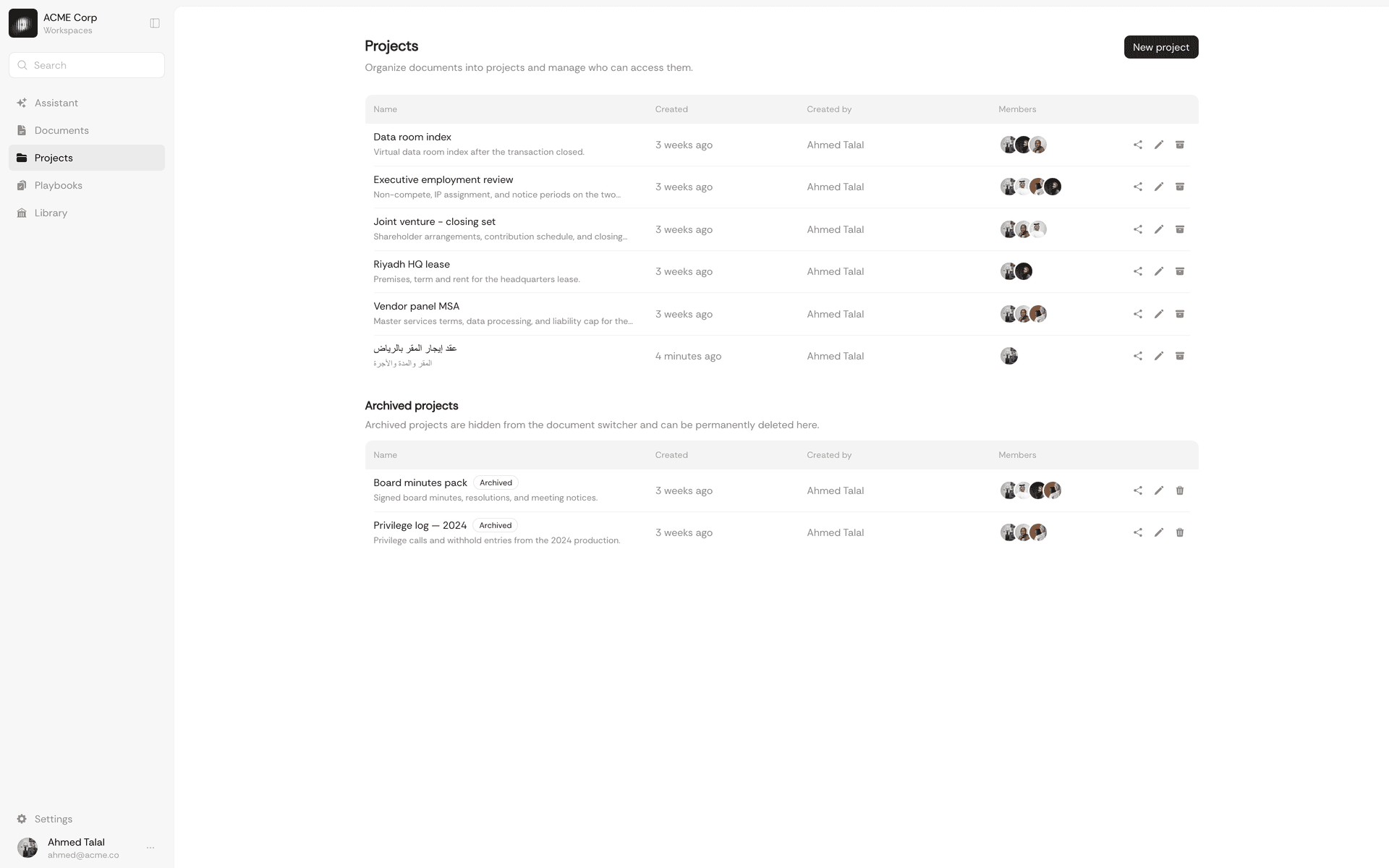
- Several lawyers work on the same matter and need shared files and permissions
- The client or regulator requires data to stay in KSA or the UAE
- The work moves between Arabic and English and has to stay consistent
Side by side
Where the difference shows up in practice
A fair comparison on the four points GCC firms raise most often.
Confidentiality
- ChatGPT
- On individual plans, conversations can be used to improve models unless you turn that off in settings. OpenAI's business plans exclude your data from training by default, but the chats still live in a general-purpose tool, away from your matter files.
- Qanu
- Customer content is not used to train foundation models. Matter files sit behind project permissions and firm boundaries, and access can be revoked the moment a matter closes.
Citations and sources
- ChatGPT
- It can search the web and show links, but it relies on whatever it finds rather than a curated set of official GCC legislation. Every reference still has to be checked by hand.
- Qanu
- Answers link to the provision, regulation, or matter document they rely on, drawn from official sources in the legal library and from your own files.
Arabic and English matters
- ChatGPT
- It writes fluent Arabic. Legal terminology can drift from one draft to the next, though, and keeping the Arabic and English versions aligned is left to you.
- Qanu
- Built Arabic-first: ask in either language, keep both versions of a document in the same matter, and get proper right-to-left layout across chat, documents, and the editor.
Playbooks and documents
- ChatGPT
- Custom GPTs and projects can hold instructions and files. Turning them into an approved firm standard, with versioned matter files and findings tied to clauses, is something you build and police yourselves.
- Qanu
- Publish preferred positions and hard limits once as a playbook, review contracts against them with findings tied to the clause, and keep versioned matter files with per-document access.
Residency and security
Keep matter data where your mandate says it must live
For many GCC clients, especially government and regulated entities, the question isn't only whether a model trains on the data. It's which country the data is hosted in, and whose cloud. Check what your ChatGPT plan offers for your jurisdiction; Qanu is built around these requirements.
For the rules behind these requirements, see our guide to GCC data protection laws for legal teams.
Read the security overviewIn-country hosting
Host matter data in KSA or the UAE today, with more jurisdictions on the roadmap.
Your keys, your cloud
Enterprise teams can bring their own inference keys (BYOK) or run Qanu in their own AWS, GCP, or SCCC account.
Enterprise identity
Sign in through Microsoft Entra and SSO, with role-based permissions on every project.
Next step
See Qanu on the kind of work your team does
Bring a sample contract or a research question your team handles. We'll walk through it in Arabic and English, with citations, permissions, and hosting set up the way your firm needs.
FAQ
Legal ChatGPT questions
Can lawyers use ChatGPT for legal work?
Yes, for tasks that involve no confidential data: brainstorming, rewording public text, or explaining general concepts. For client matters, follow your firm's policy and your bar or regulator's guidance, and verify every legal reference before relying on it.
Is ChatGPT confidential enough for client files?
It depends on the plan and on your obligations. OpenAI's business plans don't train on your data by default, but confidentiality at a law firm also means matter-level permissions and in-country hosting where it's required. That is what a legal workspace is built to provide.
How is Qanu different from ChatGPT?
ChatGPT is a general assistant. Qanu is a legal workspace for GCC law firms and in-house teams: research with citations to official sources, matter documents with permissions and versions, firm playbooks, and data hosted in KSA or the UAE, in Arabic and English.
Does Qanu replace ChatGPT?
Not necessarily. Many teams keep a general assistant for non-confidential tasks and move matter work into Qanu, where files, sources, and access are governed.
Does Qanu work in Arabic?
Yes. Qanu is Arabic-first: ask in Arabic or English, cite Arabic legislation, and keep the Arabic and English versions of a document in the same matter, with proper right-to-left layout.